


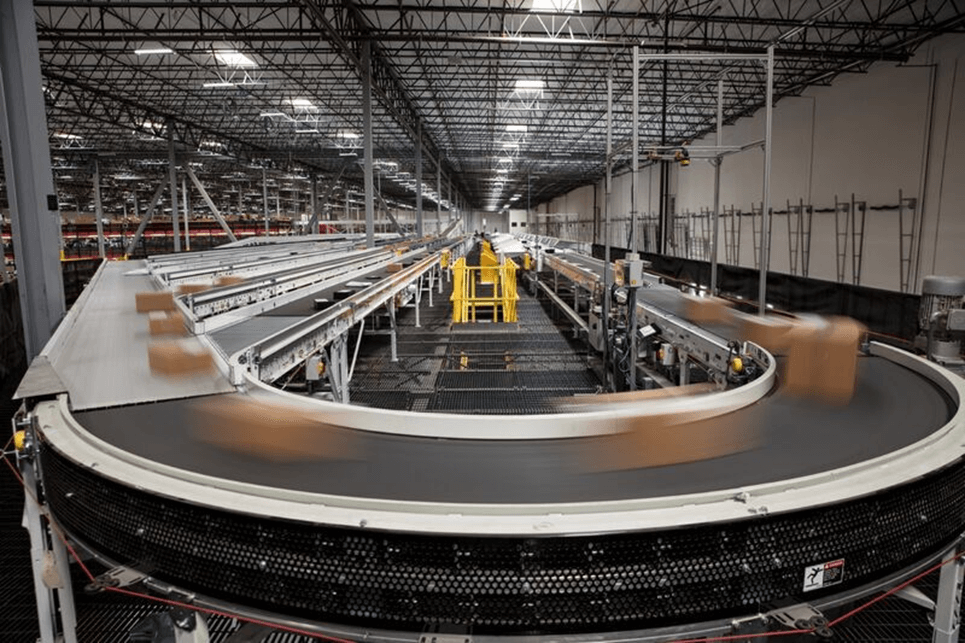
Growth is rarely the problem.
Loss of control usually is.
As brands expand into new markets, add sales channels or accelerate campaign activity, operational complexity increases faster than expected. Order volumes rise, delivery promises tighten and customer expectations become less forgiving. What worked at a smaller scale often starts to show cracks precisely when growth accelerates.
The challenge is not scaling fast.
The challenge is scaling without sacrificing visibility, service quality or operational stability.
This is where fulfilment models become a strategic decision rather than a purely operational one.
Many brands plan growth in terms of units, markets or revenue targets. What is often underestimated is how quickly complexity multiplies when those dimensions expand simultaneously.
Adding a new market means different delivery expectations, regulations and carrier networks. Adding new channels introduces new order patterns, return flows and inventory requirements. Running campaigns on top of that compresses timelines and increases volatility.
If fulfilment structures are rigid, growth turns into firefighting. If they are designed with flexibility in mind, growth becomes manageable.
A modular fulfilment model is built to adapt, not to impress on paper.
Instead of one monolithic setup that must handle every scenario, modular structures allow brands to combine different fulfilment components depending on demand, geography and channel mix. Warehousing, automation, value-added services and transport are designed as building blocks that can be scaled, adjusted or duplicated when needed.
This approach offers two critical advantages. First, it limits risk by preventing single points of failure. Second, it allows brands to grow step by step without redesigning their entire operation each time a new market or channel is added.
Modularity does not mean complexity for its own sake. It means deliberate flexibility.
Peak season used to be a few weeks per year. Today, peaks are continuous.
Campaign-driven demand, influencer activity, flash sales and marketplace dynamics create unpredictable spikes throughout the year. Brands that treat peak readiness as a temporary project inevitably struggle when demand shifts unexpectedly.
Sustainable growth requires fulfilment models that assume volatility as the norm. Capacity buffers, scalable labor models, flexible automation and reliable data flows are no longer optional. They are growth enablers.
Peak readiness is not about overbuilding. It is about designing systems that can stretch without breaking.
Growth often forces brands into difficult trade-offs. Faster delivery increases costs. Cost optimization can reduce service levels. Tight control can slow down execution.
The goal is not to maximize one dimension at the expense of the others, but to actively manage the balance between speed, cost and control. This requires transparency across the fulfilment operation.
Real-time visibility into inventory, orders and performance metrics allows brands to make informed decisions instead of reactive ones. Control does not come from rigid processes, but from reliable data and clearly defined responsibilities.
Brands that scale successfully are not the ones that move fastest at all costs. They are the ones that understand where speed matters, where efficiency matters and where control cannot be compromised.
Sustainable growth is built on operational discipline, not improvisation.
Fulfilment models that support long-term growth are designed with change in mind. They evolve as brands evolve. They provide structure without suffocating flexibility.
Scaling without losing control is not about choosing the biggest or most advanced solution. It is about choosing a fulfilment approach that remains stable when the business is not.
Growth should feel challenging, not chaotic.
Subscribe to our newsletter and be the first to receive the latest industry news, expert insights, and exclusive tips to grow your business. Join our community today and stay one step ahead!